Our Results
Proven Outcomes. Delivered with Precision.
Capital Radiosurgery Centers SBRT programs are built around long-term cancer control, reduced toxicity, and fewer disruptions to patients’ lives. Outcomes are supported by multi-year clinical data and align with national standards of care.
Prostate Cancer Results
SBRT with CyberKnife
High Long-Term Cancer Control
Published studies report five-year control rates approaching 98%, placing SBRT among the most effective non-surgical treatments for localized prostate cancer.
Comparable to Surgery, Without the Burden
Ten-year outcome data shows SBRT achieves similar disease control to prostatectomy, while avoiding surgery, hospitalization, and extended recovery. Treatment is typically completed in five sessions.
Lower Toxicity, Better Quality of Life
Compared with longer radiation courses, SBRT is associated with:
- Fewer bowel and sexual side effects
- Short-term urinary symptoms that typically resolve
- Faster return to normal daily activities

-
Dose: 40 Gy delivered in 5 fractions
-
NCCN-approved for low, intermediate, and high-risk prostate cancer
-
SBRT used in ~90% of nonmetastatic prostate cases
-
Fewer treatments with less urinary and bowel toxicity
-
Cancer control equal to or better than IMRT
-
Treatment completed in one week or less
-
16 patients were treated in an 8-hour day
-
Capacity to treat 800+ patients per year per CyberKnife
Breast Cancer Results
SBRT & APBI After Lumpectomy
Equivalent Cancer Control, Less Toxicity
Ten-year randomized trials show accelerated partial breast irradiation (APBI) provides the same cancer control as whole-breast radiation for appropriately selected patients—with fewer side effects.
More Targeted Treatment
By treating only the tumor bed plus margin, SBRT:
- Reduces exposure to healthy breast tissue
- Shortens treatment from weeks to days
- Improves long-term cosmetic outcomes
CRC Clinical Practice
- DCIS and Stage I disease post-lumpectomy
- 30 Gy in 5 fractions
- NCCN-supported treatment approach

SBRT: One Week

3D: 3-6 weeks
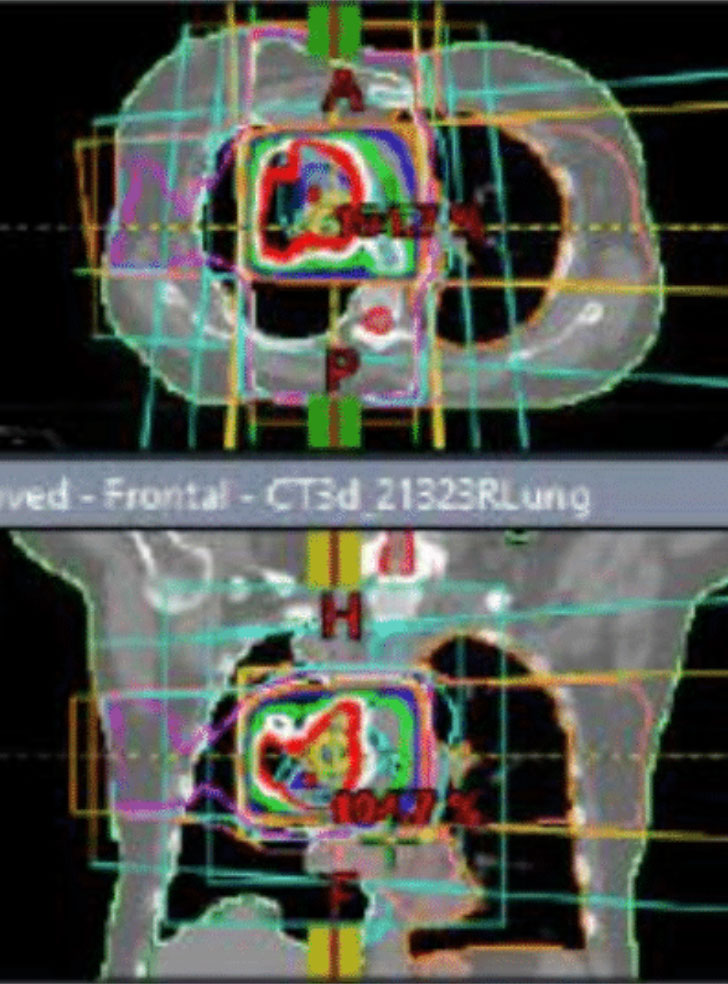
- Technique: APBI (Accelerated Partial Breast Irradiation)
- Dose: 30 Gy in 5 fractions
-
Criteria: ≤3 cm tumor, node-negative, negative margins
-
10-year randomized trials show:
-
Same cancer control as whole-breast radiation
-
Less toxicity and improved outcomes
-
-
NCCN-supported treatment option
-
Targets only the tumor bed (+1 cm margin)
-
Avoids weeks of whole-breast radiation
-
Faster recovery, fewer side effects
Lung Cancer Results
SBRT for Early-Stage & Recurrent Disease
Excellent Local Tumor Control
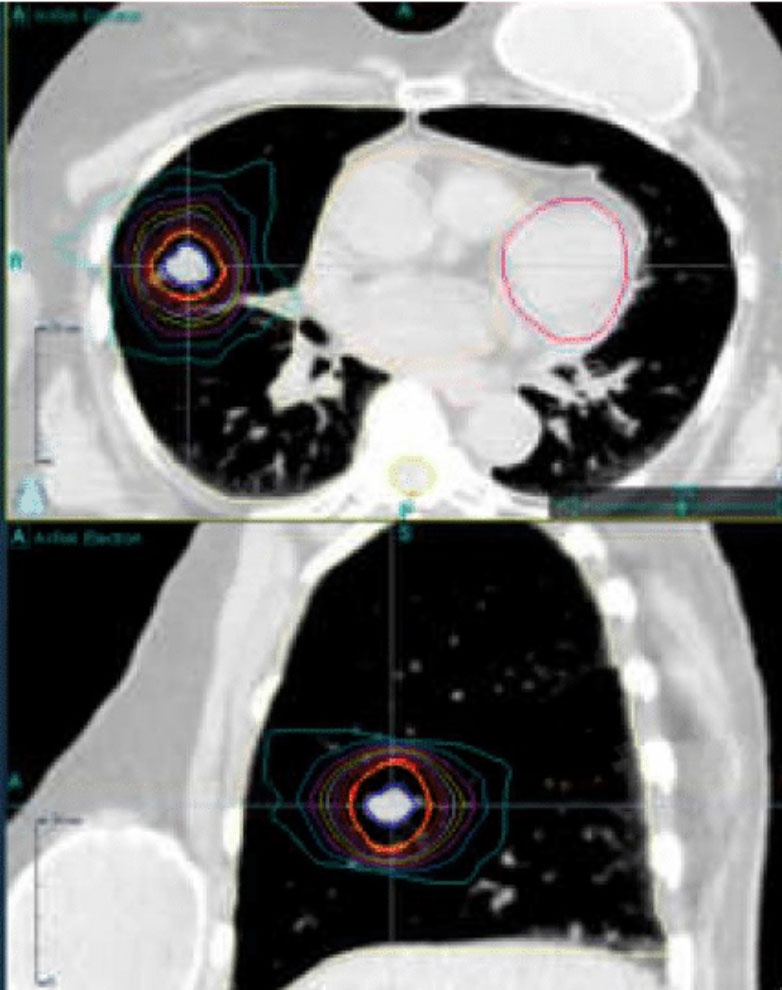
SBRT achieves over 90% local control at three years for early-stage non-small cell lung cancer—on par with surgical outcomes.
Comparable to Surgery for Early-Stage Disease
Long-term (10-year) data shows SBRT outcomes comparable to surgery for early-stage lung cancer, with:
- Fewer acute side effects
- No incisions or hospital stay
- Preserved lung function
Standard of Care for Medically Inoperable Patients
SBRT is widely recognized as the standard of care for patients who cannot undergo surgery, and is increasingly used even when surgery is an option.
SBRT: One Week
3D: 3-6 weeks
-
Stage I lung cancer now represents ~50% of cases treated
-
SBRT is standard of care for early-stage, medically inoperable patients
-
Typical course: 3–5 fractions
-
Solitary lung metastases: 3–5 fraction SBRT
-
Recurrent lung disease: SBRT retreatment options
-
Stage III disease: IMRT/3D ± chemotherapy (30 fractions)
-
Earlier detection via low-dose CT screening
-
SBRT enables curative intent without surgery
-
Shorter treatment course with durable control
What patients are saying:
“You have made such a change in a short time. I thank you for your kindness and gentle ways of helping someone that was in such discomfort.”
Barbara P.
“I love everyone there. The staff are AMAZING! God bless them all for me. You don’t feel like you are in a hospital but a spa center. They make me soooo happy and a part of my healing process.”
Victoria J.
“Looking forward to ringing the bell. We’re halfway done!”
Patricia L.